
What is a security policy?
A security policy is a set of documented guidelines that explain how an organization protects its information, systems, networks, and other important business assets. It provides employees, contractors, and partners with clear direction on how information should be accessed, used, shared, and protected.
A security policy is an organizations playbook for keeping information secured. It outlines the practices and responsibilities that help reduce risk, protect sensitive data, and support compliance requirements. By establishing clear expectations, organizations can apply security measures more consistently across the entire organization.
How does a security policy work?
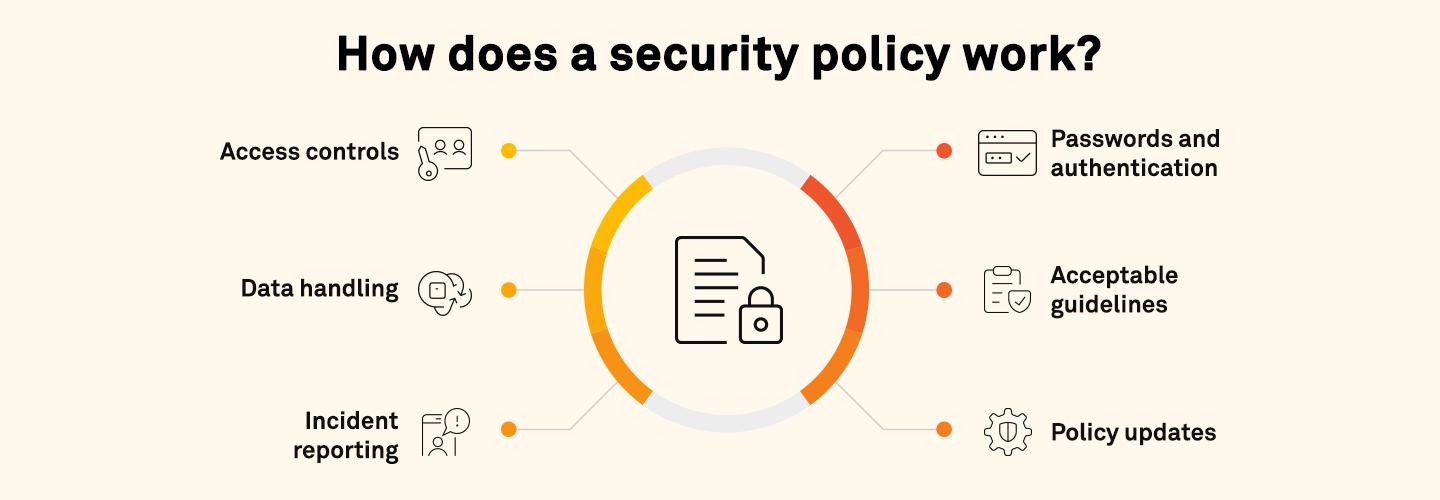
A security policy turns security goals into practical workplace guidance. Rather than leaving employees to make security decisions on their own, it creates a common framework for handling information and technology responsibly. Most security policies include guidance around:
Access controls that determine who can view or use specific systems and information.
Passwords and authentication requirements that help verify user identities and protect accounts.
Data handling practices for storing, sharing, retaining, and disposing of information appropriately.
Acceptable guidelines that outline proper use of company devices, networks, and applications.
Incident reporting procedures that explain what to do if a potential security issue is identified.
Because technology and security threats are constantly evolving, organizations should regularly review and update their policies to keep them relevant and effective.
Why is a security policy important?
Security policies help create a shared understanding of how information should be protected across an organization. Without clear guidance, different teams may follow different practices, increasing the likelihood of mistakes, security gaps, or compliance issues. A thorough security policy can help organizations:
Reduce risk by establishing clear expectations for protecting systems, data, and business operations.
Support compliance efforts by documenting the controls and practices required by regulations and industry standards.
Improve consistency by giving employees a common set of guidelines to follow.
Build security awareness by helping users understand their role in protecting information.
Strengthen business resilience by promoting security practices that support continuity and reduce disruption when incidents occur.