
What is an insider threat?
An insider threat is a security risk that comes from someone inside an organization who has accidentally or deliberately authorized access to an organization's systems, data, facilities, or business operations. This can include employees, contractors, vendors, partners, or even former employees who haven’t had their access properly removed.
A common misconception many people assume is that insider threats are always malicious, but that's not necessarily always the case. Some incidents happen because of everyday mistakes, such as sharing sensitive files with the wrong person, using unsecured devices, or falling victim to phishing attacks.
Because insiders already have some level of trusted access, their actions can be more difficult to spot than traditional external attacks. That's why organizations rely on a combination of security controls, access management, monitoring, and employee training to help reduce risk within the organization.
How do insider threats occur?
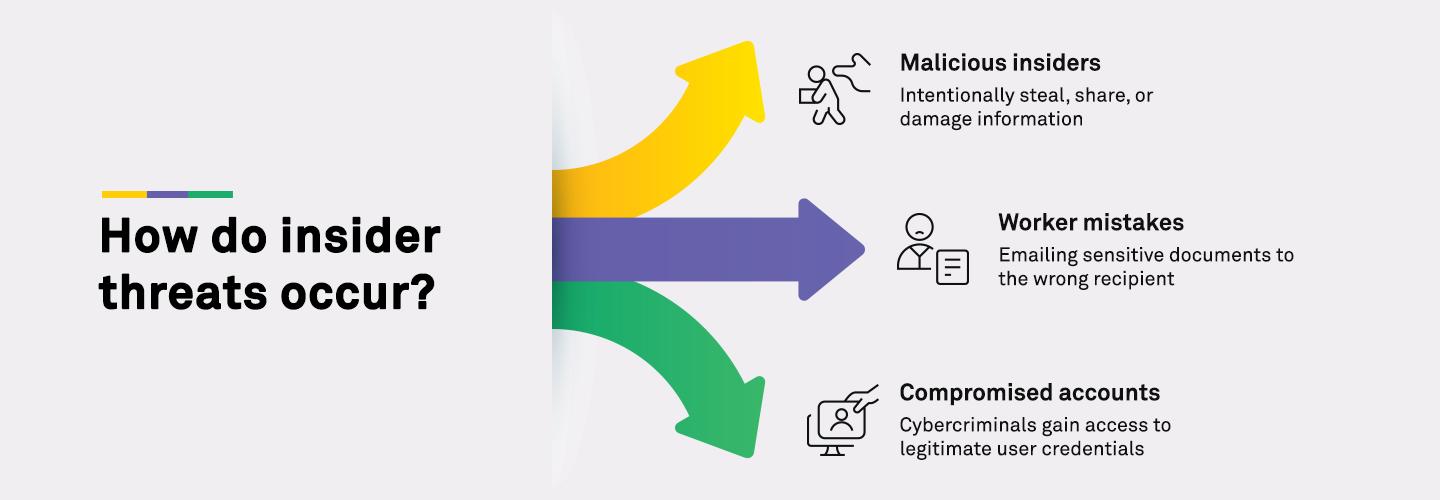
An insider threat occurs when someone with legitimate access exposes, misuses, changes, or improperly shares information, systems, or resources.
Insider threats can take several forms:
Malicious insiders intentionally steal, share, or damage information for personal, financial, or competitive reasons
Employees or other workers create risk through mistakes, such as emailing sensitive documents to the wrong recipient or storing business data in unauthorized applications
Compromised accounts occur when cybercriminals gain access to legitimate user credentials and operate under a trusted identity
For example, an employee might accidentally upload confidential files to an unsecured cloud storage service, while another individual could intentionally copy customer data before leaving the company. Although the motives are different, both situations can create significant business and security risks.
How can organizations reduce insider threat risks?
Employees and trusted users often need access to sensitive information and critical business systems to perform their roles on a daily basis. Because of this, insider threats become much more prevalent, but there are ways businesses can mitigate risks.
Key areas to consider include:
Data protection
Customer records, financial information, intellectual property, and confidential business documents are valuable assets that must be protected. Whether intentional or accidental, unauthorized access, sharing, or misuse of sensitive data can expose organizations to significant risk.
Regulatory compliance
Many industries are required to protect regulated information and maintain strict controls over who can access it. Insider incidents can result in compliance violations, audits, reputational damage, and financial penalties.
Security awareness
Not all insider threats are malicious. Many incidents stem from human error, such as mishandling sensitive information or falling victim to phishing attempts. Ongoing security training helps employees recognize potential risks, follow established policies, and make informed decisions that protect organizational data.