
What is information governance?
Information governance is the framework an organization uses to manage, protect, and use information throughout its lifecycle. It covers how information is created, stored, accessed, shared, retained, and deleted.
The purpose of information governance practices is to give employees clear, consistent ways to handle content across documents, email, business systems, collaboration platforms, physical records, and other sources. Information governance brings together policies, processes, responsibilities and technology, often connecting areas such as records management, data governance, privacy, cybersecurity, and compliance.
How does information governance work?
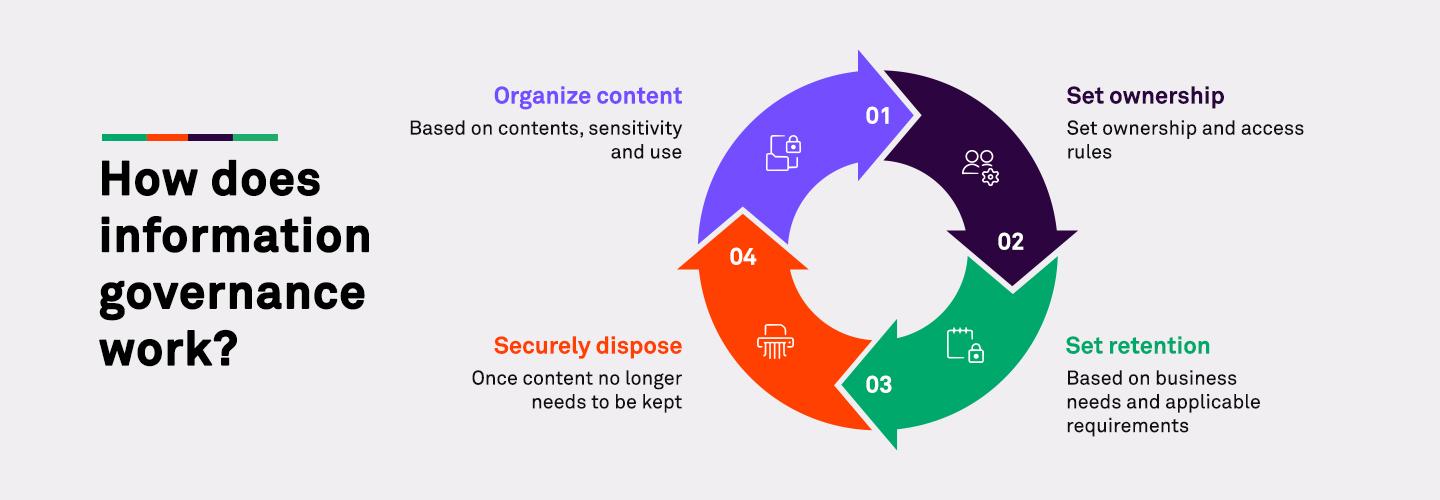
Information governance starts with understanding what an organization has, where it is stored, who is responsible for it, and which requirements apply. From there, policies and defined practices guide how it is handled from creation through disposal.
Information governance usually includes:
Organizing content based on what it contains, how sensitive it is and how it needs to be used
Setting ownership and access rules so it's clear who is responsible and who can view, edit or share it
Setting retention periods based on business needs and applicable legal or regulatory requirements
Reviewing and securely disposing of content once it no longer needs to be kept
Standards such as ISO 15489 for records management can help provide a foundation for these practices. The exact approach will depend on the types of information a business handles and the legal, regulatory and operational requirements it needs to meet.
Why is information governance important?
Information is more useful when people can find what they need, trust what they find, and understand how it should be handled. Information governance creates more consistency around those everyday decisions while helping businesses manage information-related risks.
Effective information governance can help organizations:
Protect sensitive information by setting clear rules around access, classification and sharing
Meet compliance requirements by defining how information should be stored, retained and disposed of
Make useful information easier to find by reducing outdated, duplicate or poorly organized content
Be better prepared for audits, litigation holds, investigations and electronic discovery requests