
What is incident response?
Incident response is the structured process organizations use to identify, investigate, contain, and recover from cybersecurity incidents or other security-related events. The main goal is to minimize business disruption, reduce any potential damage, protect sensitive data, and restore normal operations as quickly as possible.
Security incidents can include malware infections, ransomware attacks, unauthorized access, data breaches, insider threats, and compromised accounts. An incident response program is vital because it helps organizations respond consistently and effectively when these events occur.
How does incident response work?
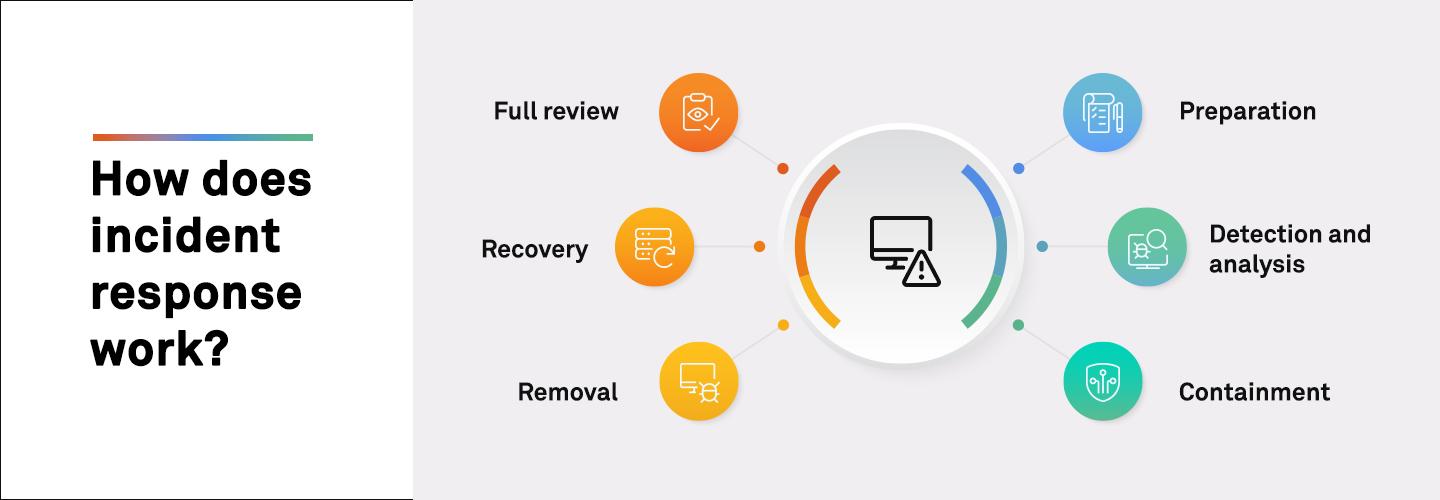
Incident response typically follows a defined set of activities that guide an organization through a possible security incident. While frameworks may vary, most incident response programs include several core phases such as:
Preparation through policies, procedures, training, and response planning
Detection and analysis to identify suspicious activity and determine whether an incident has occurred
Containment to limit the spread or impact of the event
Removal of malicious software, unauthorized access, or other causes of the incident
Recovery to restore systems, applications, and business operations
Full review to document the event and strengthen future security measures
Why is incident response important?
Incident response is important because even organizations with strong security controls can experience security incidents. A documented response process helps reduce risk while also providing a plan for faster recovery.
Key reasons incident response matters include:
Reducing business disruption: A planned response can help restore critical systems and services faster.
Limiting potential damage: Rapid containment can reduce the spread of any malware, unauthorized access, or data exposure.
Strengthening future security: A thorough review after the incident can help organizations identify weaknesses and improve security controls for the future.