
What is a firewall?
For modern digital security, a firewall refers to a security system that monitors and controls incoming and outgoing network traffic based on predefined rules. Think of it as a digital gatekeeper: it decides which data packets are allowed to enter or leave your network, protecting systems from unauthorized access and cyber threats.
How a firewall works
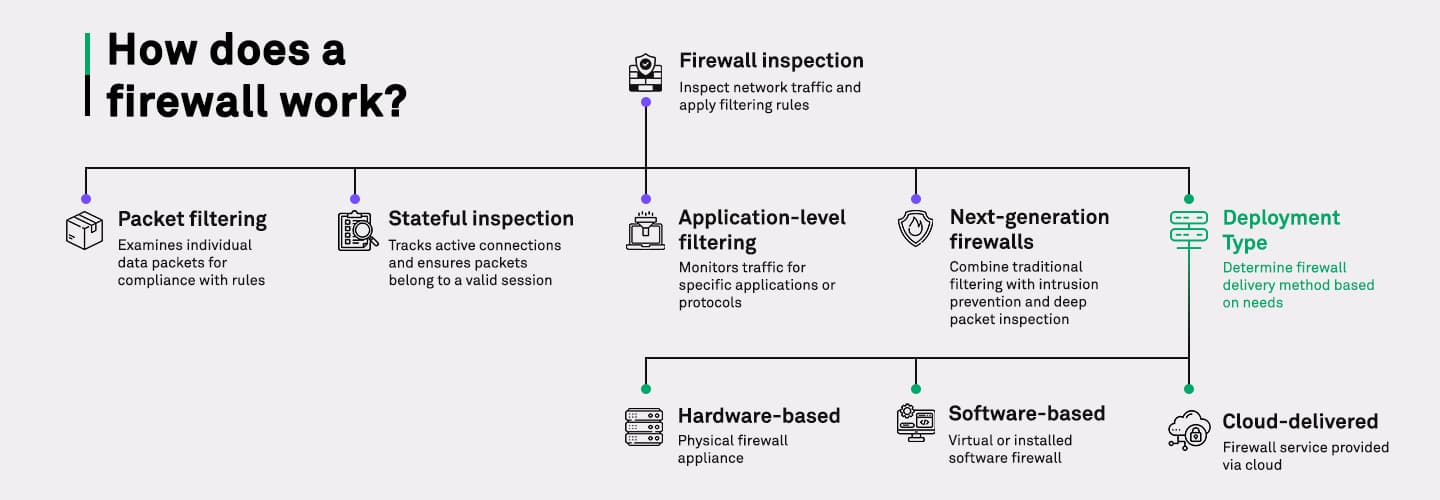
Firewalls inspect network traffic and apply filtering rules. They can operate at different levels:
Packet filtering: Examines individual data packets for compliance with rules.
Stateful inspection: Tracks active connections and ensures packets belong to a valid session.
Application-level filtering: Monitors traffic for specific applications or protocols.
Next-generation firewalls (NGFW): Combine traditional filtering with advanced features like intrusion prevention and deep packet inspection.
Firewalls can be hardware-based, software-based, or cloud-delivered, depending on the organization’s needs.
Why firewalls are important
Firewalls are essential for:
Blocking unauthorized access: Prevent hackers from exploiting vulnerabilities.
Protecting sensitive data: Stop malicious traffic before it reaches internal systems.
Maintaining compliance: Many regulations require network security measures.
Reducing attack surface: Firewalls help isolate networks and segment traffic.
As cyberattacks grow more sophisticated, firewalls remain a critical layer in a multi-layered security strategy.