
What is data loss prevention (DLP)?
Data loss prevention (DLP) is a set of policies, processes, and technologies designed to identify, monitor, and protect sensitive information from unauthorized access, sharing, or loss. Organizations use DLP to help prevent data such as customer records, financial information, intellectual property, and other personal data from leaving approved environments or being used inappropriately.
DLP programs typically combine security controls with business rules to detect sensitive content and enforce actions such as blocking transfers, encrypting files, restricting sharing, or generating alerts. The goal is to reduce risk while still allowing employees to access and use the tools and information they need to do their work.
How does data loss prevention (DLP) work?
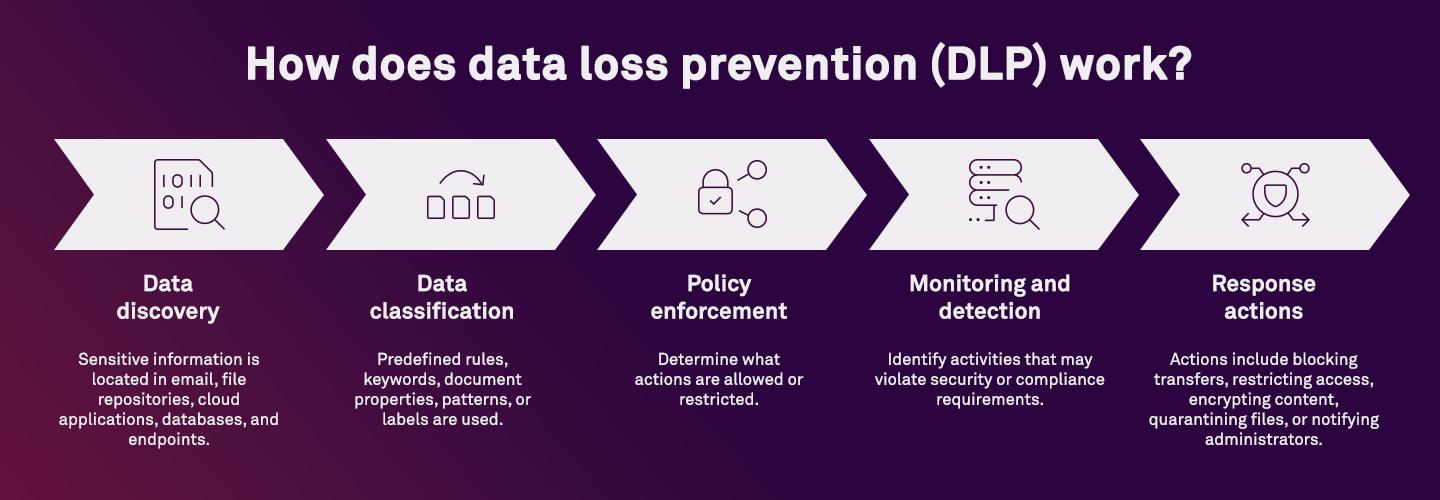
DLP works by identifying sensitive information, defining protection rules, and monitoring how data is accessed, shared, stored, or transmitted.
A typical DLP program includes the following steps:
Data discovery is used to locate sensitive information in email, file repositories, cloud applications, databases, and endpoints
Data classification uses predefined rules, keywords, document properties, patterns, or labels
Policy enforcement helps to determine what actions are allowed or restricted
Monitoring and detection aim to identify activities that may violate security or compliance requirements
Response actions such as blocking transfers, restricting access, encrypting content, quarantining files, or notifying administrators
For example, a DLP policy might detect a document containing payment card data and prevent it from being emailed outside the organization or uploaded to an unauthorized cloud service.
Why is data loss prevention (DLP) important?
Data Loss Prevention helps organizations protect sensitive information while supporting business operations, regulatory compliance, and information governance. A single data exposure can result in financial penalties, operational disruption, reputational damage, or loss of customer trust.
Key reasons businesses find DLP important include:
Reduced security risk: DLP helps detect and prevent accidental or intentional exposure of sensitive information.
Supports regulatory compliance: Many organizations must protect personal, financial, healthcare, or confidential business data to meet regulatory and contractual requirements.
Protects intellectual property: Sensitive business information such as designs, research, source code, and strategic plans can be monitored and safeguarded.
Promotes secure collaboration: Employees can share information more confidently when clear protection policies and controls are in place.