
What is data governance?
Data governance gives organizations a clear way to manage data throughout its entire lifecycle. It sets expectations around who is responsible for managing it, how it should be handled, and what happens as information is created, stored, accessed, shared, retained, and eventually deleted.
Good governance also helps keep data accurate, secured, and accessible to the right people. That applies to structured data, like customer and financial records, as well as the information contained in documents, emails, and other business content. With clear ownership and standards in place, employees have a better understanding of how data should be managed and used.
How does data governance work?
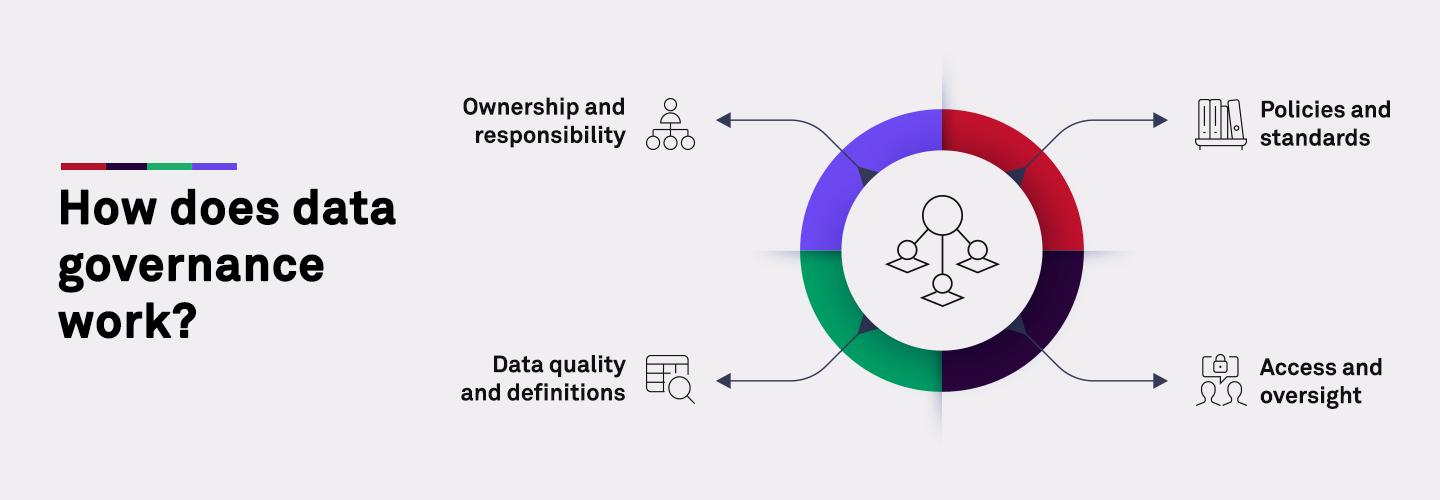
Data governance puts clear rules and responsibilities around how data is handled across an organization. While every organization will approach it differently, most programs focus on a few core areas:
Ownership and responsibility clarify who makes decisions about data and who is responsible for keeping it accurate and properly managed
Policies and standards set the rules for how data is classified, accessed, stored, shared, retained, and eventually deleted
Data quality and definitions help teams work from consistent information by establishing what data means and addressing records that are inaccurate, incomplete, outdated, or duplicated
Access and oversight control who can view, use, or change information and help organizations keep track of whether their governance policies are being followed
As an example, customer payment information may be classified as sensitive, limited to employees who need it only for their work, and kept only for a defined period of time. Data governance provides the framework for putting those decisions into practice and applying them consistently.
Why is data governance important?
Data governance helps organizations make better use of their information while keeping it accurate, protected, and properly managed. With clear standards in place, teams are less likely to follow different rules for the same data, which can create confusion, increase risk, and make information harder to trust.
Some of the most important benefits include:
Better data quality: Clear ownership and standards help keep information accurate and consistent, giving teams more reliable data for reporting, analytics, and everyday decisions.
More consistent ways of working: Shared definitions and policies give employees clear guidance on how information should be handled across different departments, systems, and processes.
More reliable analytics and AI: Analytics and artificial intelligence are only as useful as the data behind them. Governance helps organizations understand where data comes from, who can use it, and whether it's appropriate in certain areas