
What is a data breach?
Data breach describes an event where sensitive, confidential, or protected information is accessed, disclosed, or stolen by unauthorized individuals. This can involve personal data, financial records, intellectual property, or business-critical information. Data breaches often occur due to cyberattacks, system vulnerabilities, or even human error.
How a data breach happens
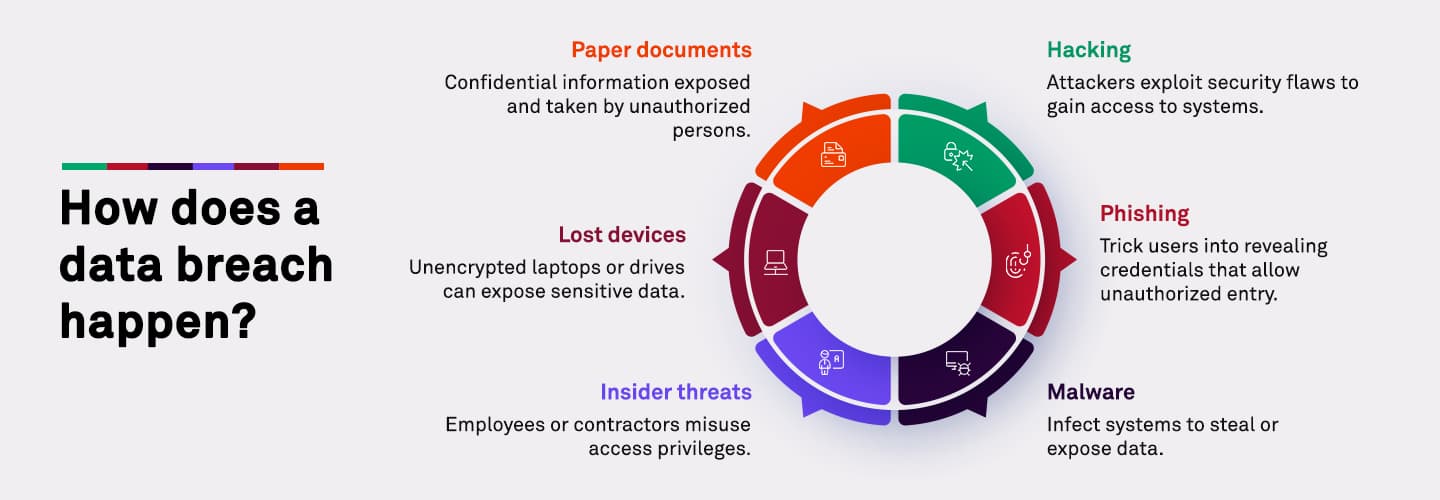
Data breaches can occur through several methods:
Hacking: Attackers exploit security flaws to gain access to systems.
Phishing: Trick users into revealing credentials that allow unauthorized entry.
Malware: Infect systems to steal or expose data.
Insider threats: Employees or contractors misuse access privileges.
Lost or stolen devices: Unencrypted laptops or drives can expose sensitive data.
Once attackers gain access, they may sell the data, use it for identity theft, or leverage it for further attacks.
Today, data breaches are typically understood in digital terms. We think of them as resulting from unauthorized access to computers, networks, or other digital services. However, paper documents containing confidential or sensitive information shared with or inadvertently exposed and taken (like a document left on a shared printer) by unauthorized persons can also be a source of a data breach.
Why data breaches are important to understand
Data breaches can have severe consequences:
Financial loss: Costs include remediation, fines, and lost business.
Reputation damage: Customers lose trust when their data is compromised.
Legal and compliance risks: Breaches often violate regulations like GDPR or HIPAA.
Operational disruption: Recovery efforts can halt normal business processes.
Preventing breaches requires a layered security approach, including encryption, strong authentication, and employee training. Organizations that still print documents also need to have defined protocols in place for the handling of those paper documents, to limit their exposure to unauthorized personnel.