
What is Access Control?
Access control refers to the practice of managing who can access systems, applications, or data, and what actions they are allowed to perform. It ensures that only authorized users can view, use, or modify information.
In a cybersecurity context, access control helps protect sensitive data by limiting access based on certain permissions. It works alongside authentication to not only confirm identity but also enforce what activities each user is allowed to do once that access has been granted to them.
How does Access Control work?
Access control works by defining permissions and applying them to users, groups, or systems. These permissions determine what resources can be accessed and what actions can be taken. The control mechanism for digital system access is the login and the policies assigned to each user.
Common approaches include:
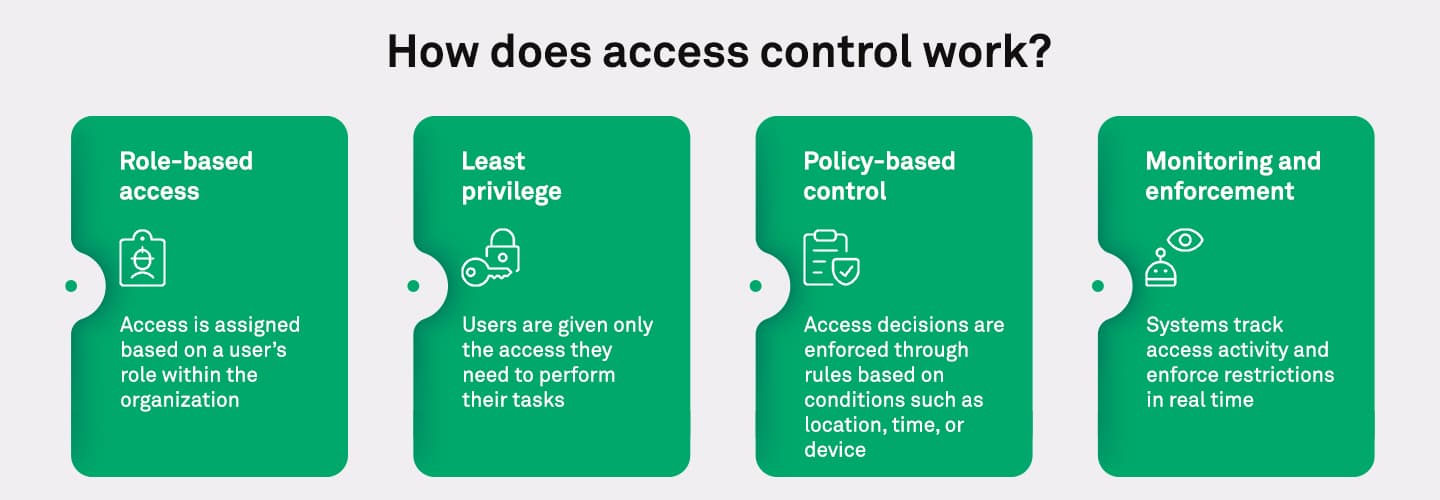
Role-based access control (RBAC): Access is assigned based on a user’s role within the organization
Least privilege: Users are given only the access they need to perform their tasks
Policy-based control: Access decisions are enforced through rules based on conditions such as location, time, or device
Monitoring and enforcement: Systems track access activity and enforce restrictions in real time
Why is Access Control important?
Access control is important because it helps prevent unauthorized access to sensitive systems and data. Without it, users may have more access than necessary, increasing the risk of data exposure or misuse.
By limiting access based on roles and responsibilities, organizations can reduce security risks while maintaining productivity. It also improves accountability by clearly defining who can access specific resources and tracking user activity.